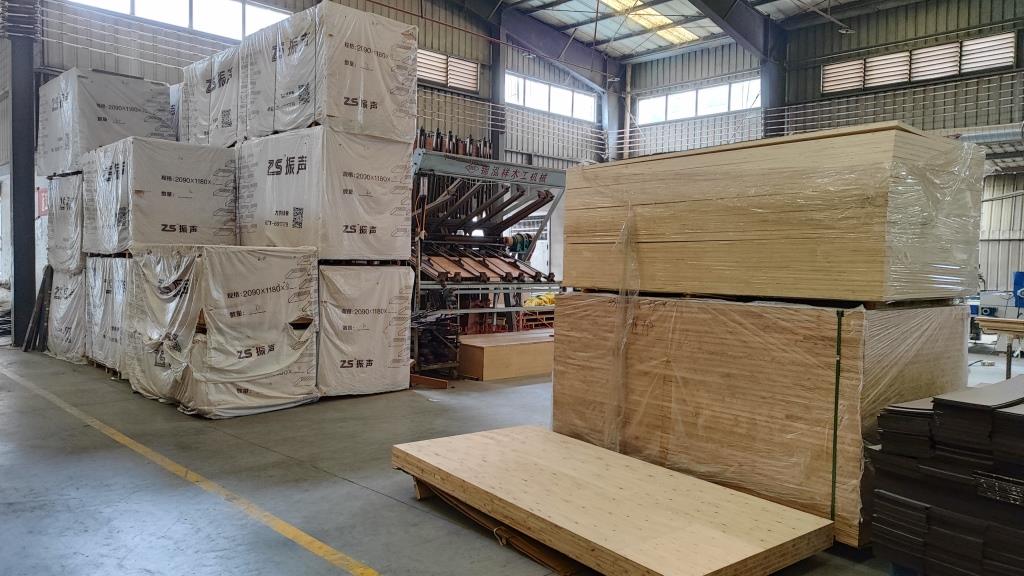
Designed to align with modern Japanese architectural principles, these doors combine sleek aesthetics with rigorous environmental performance criteria.
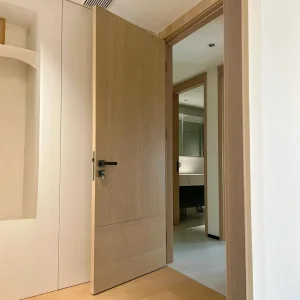
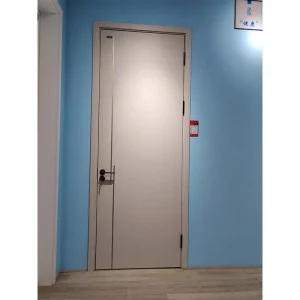
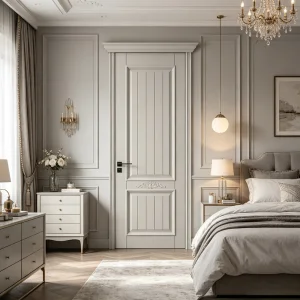
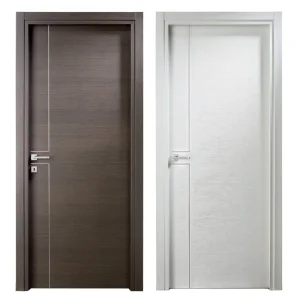
Tokyo's metropolitan area represents one of the world's most sophisticated and demanding construction markets. Dominated by transit-oriented developments, super-tall skyscrapers, and ultra-high-density residential blocks, every structural element must meet stringent national building codes. The Ministry of Land, Infrastructure, Transport and Tourism (MLIT) enforces specific standards under the Building Standard Law of Japan, focusing heavily on seismic design, localized fire-resistance, and environmental chemical limits.
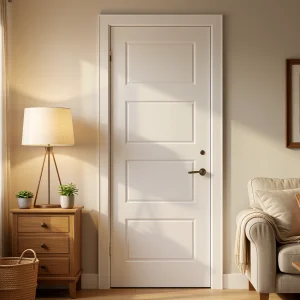
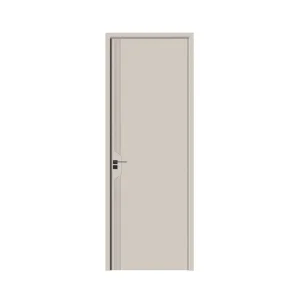
Engineered wooden flush doors are the backbone of interior space division across Tokyo's office developments, luxury boutique hotels, and residential units. Unlike natural solid timber, which is susceptible to warping under Tokyo's seasonal humidity swings—spanning hot, humid summers (the Tsuyu rainy season) and exceptionally dry winters—engineered flush doors offer superior structural equilibrium. The core construction uses cross-banded veneers and particleboard or LVL (Laminated Veneer Lumber) cores, mitigating the natural movement of wood fiber.
General Contractors in Japan, commonly referred to as "Zenekon" (such as Obayashi, Kajima, Taisei, Shimizu, and Takenaka), execute large-scale urban revamps in districts like Roppongi, Toranomon, and Otemachi. Their procurement offices enforce strict vendor qualifications. We provide detailed technical dossiers, including raw material traceability certificates (FSC certified wood products) and non-combustible or quasi-noncombustible material certifications. Every engineered door slab is manufactured with millimetric precision, allowing rapid installation on site via integrated pre-hung systems.
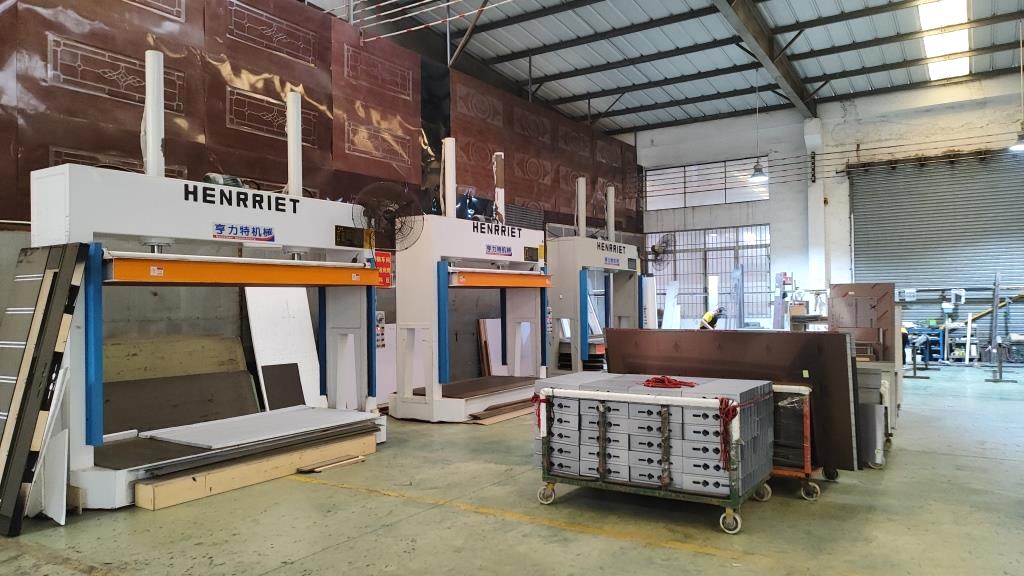
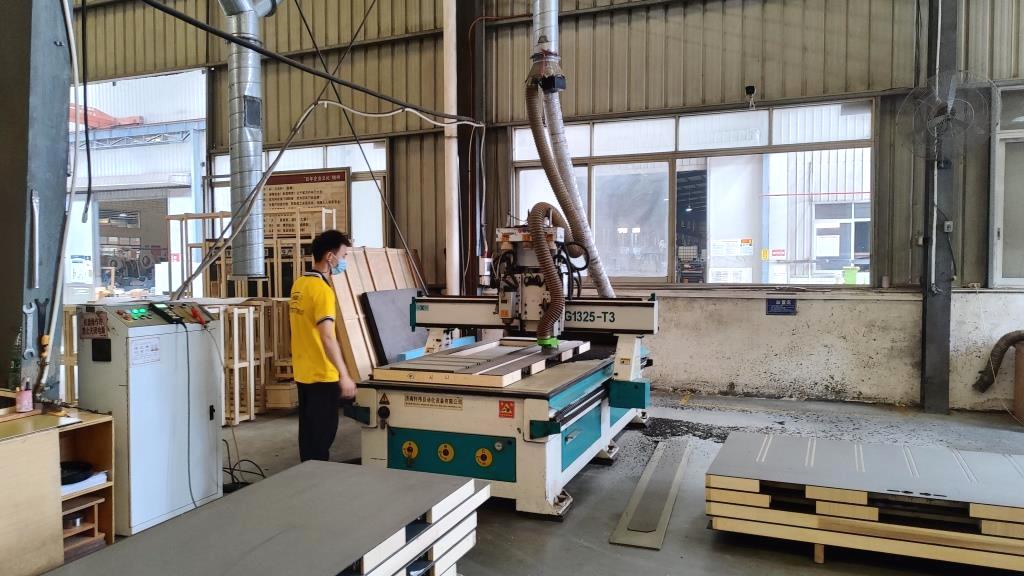
Our engineered wooden flush doors are built using advanced hydraulic cold and hot press systems, combined with precision CNC milling. The technical composition of each slab is custom-designed according to the project's programmatic usage:
We employ high-density MDF (Medium Density Fiberboard) or HDF (High Density Fiberboard) cross-banded outer layers over a solid timber framework (typically SPF or engineered pine). For applications requiring strict acoustic privacy—such as hotel guest suites and corporate boardroom designs—our composite cores utilize engineered soundproofing layers, including lead-free heavy rubber membranes and porous mineral wool boards, achieving up to 40dB sound attenuation.
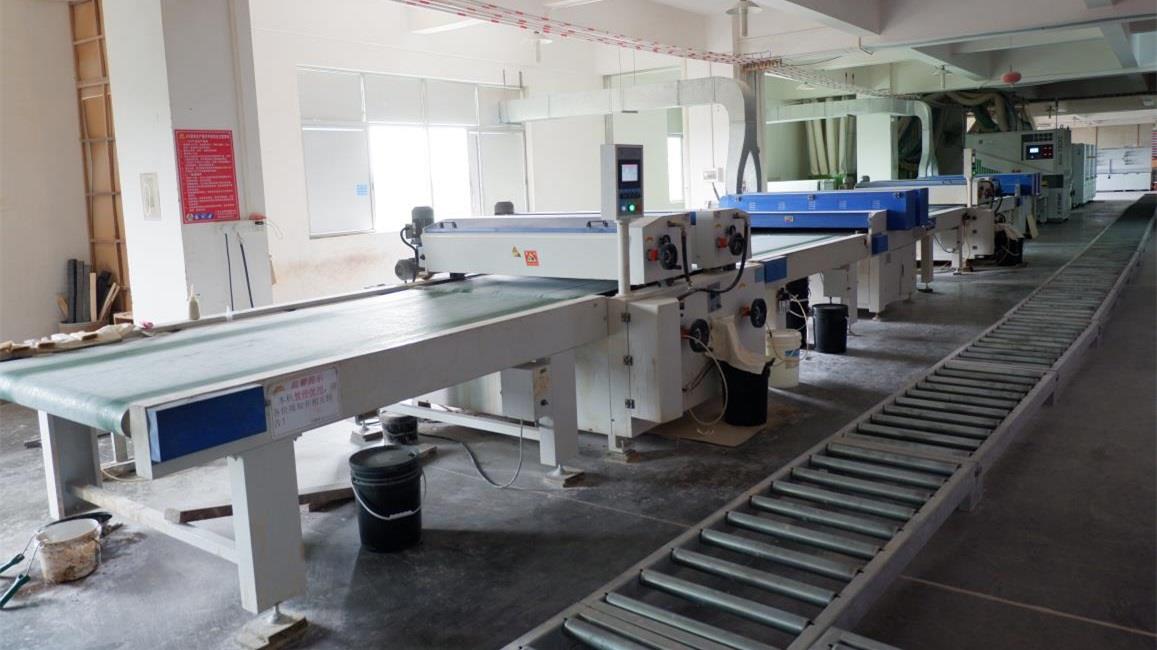
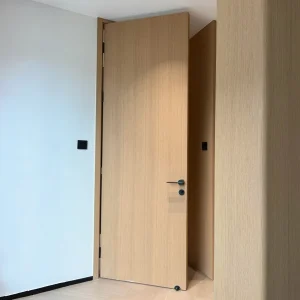
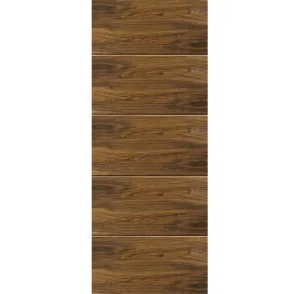
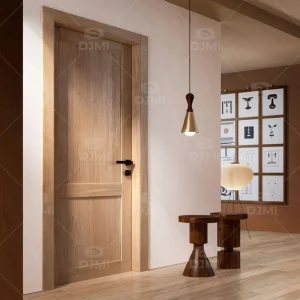
Through advanced slicing techniques, we offer rift-cut and crown-cut natural wood veneers, including Premium White Oak, American Walnut, and Teak. To preserve the natural warmth of the timber while providing resistance to fire and heavy foot traffic, we apply high-durability UV-cured waterborne coatings. Alternatively, continuous pressure laminate (CPL) finishes are available for heavy-duty commercial zones, offering anti-scratch and moisture-resistant characteristics.
Understanding the requirements of Japanese developers, we pre-route hinge pockets and lock sets to match regional hardware specifications, such as Miwa Lock Co. and Showa Lock standards. Precision routing ensures concealed hinge mechanisms and magnetic lock plates fit flush with the door stile, enhancing the minimalist architectural look favored in upscale residential areas like Minato and Shibuya.
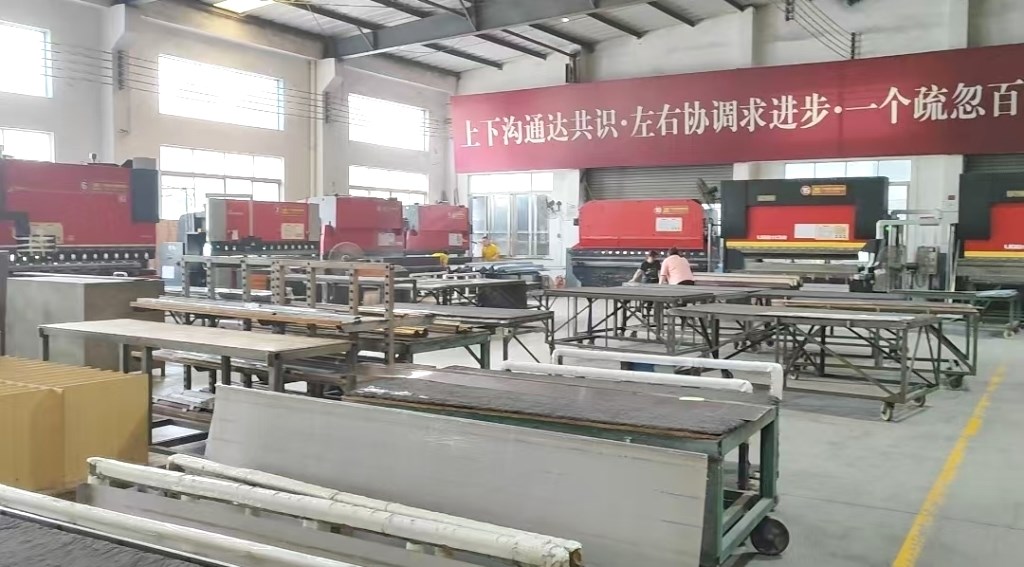
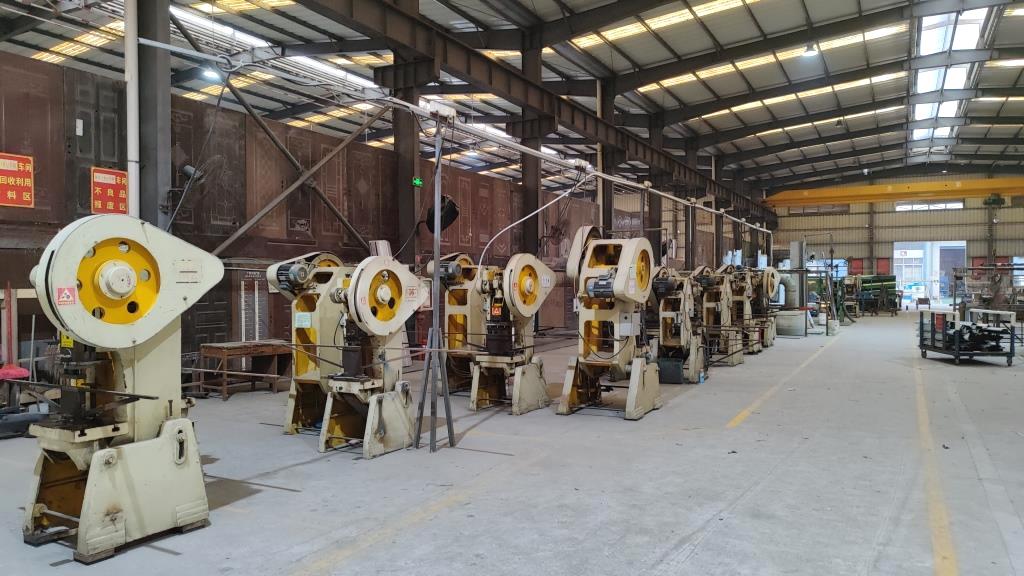
Zhejiang Larsom Door Co., Ltd. is a global leader in the engineering, design, and manufacturing of architectural doors. Operating a production facility spanning over 16,000 square meters and supported by 160 skilled technicians, our infrastructure handles complex project demands worldwide.
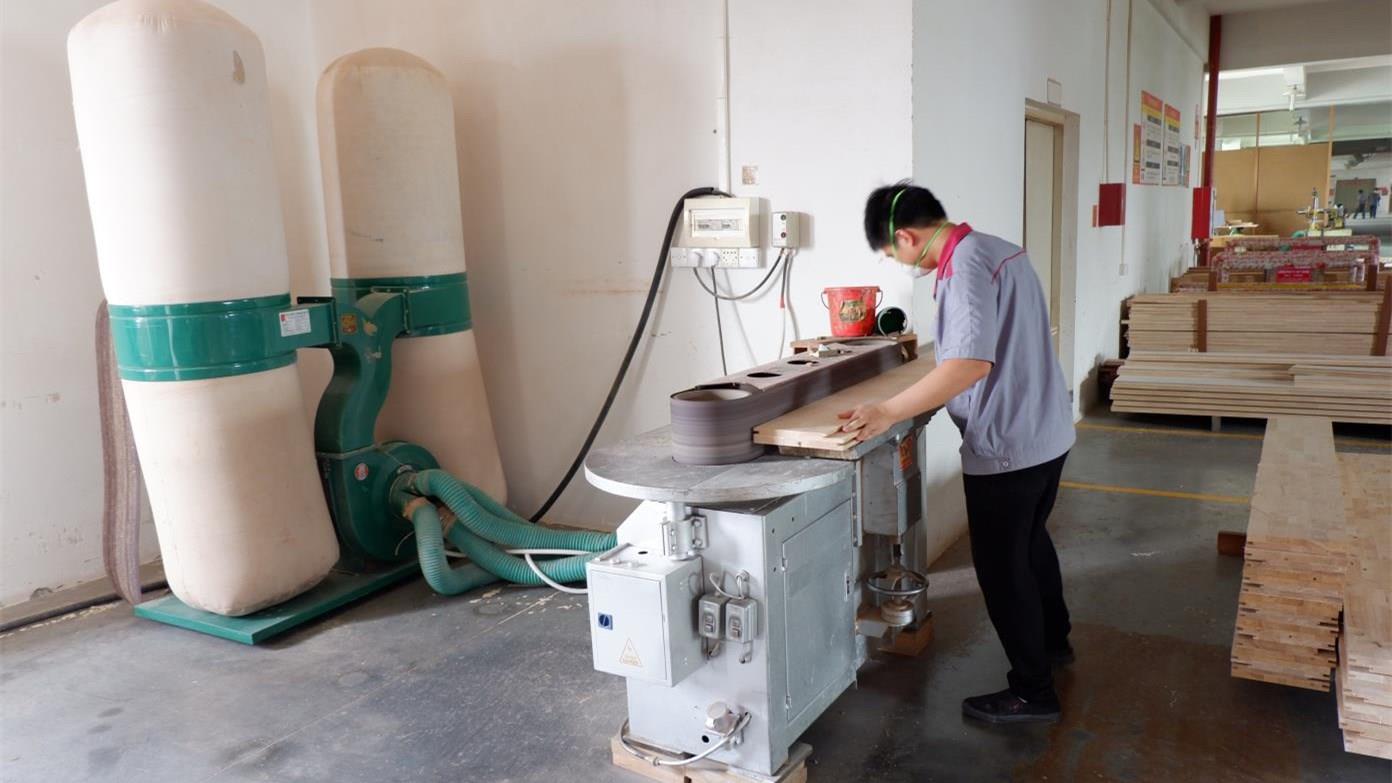
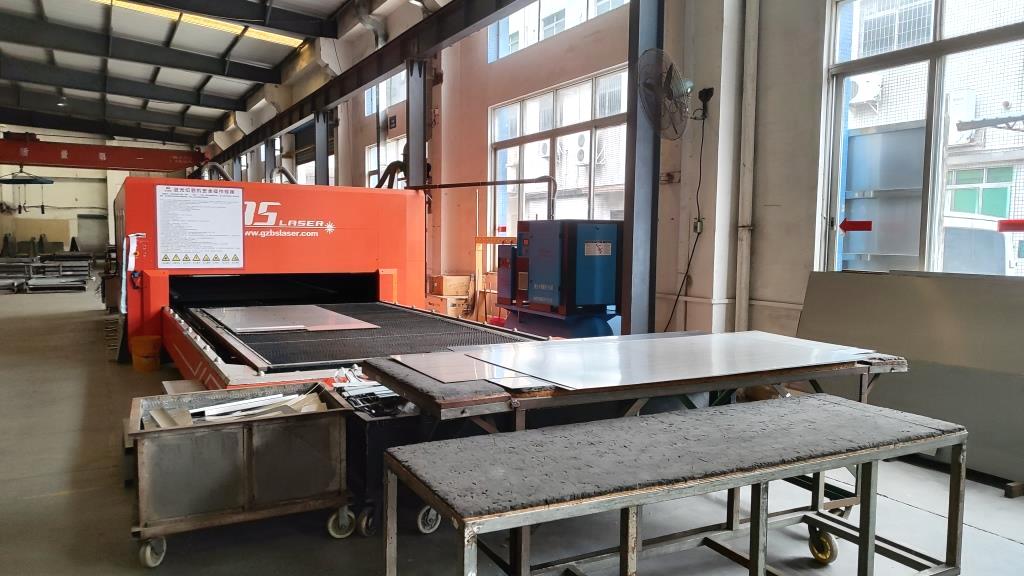
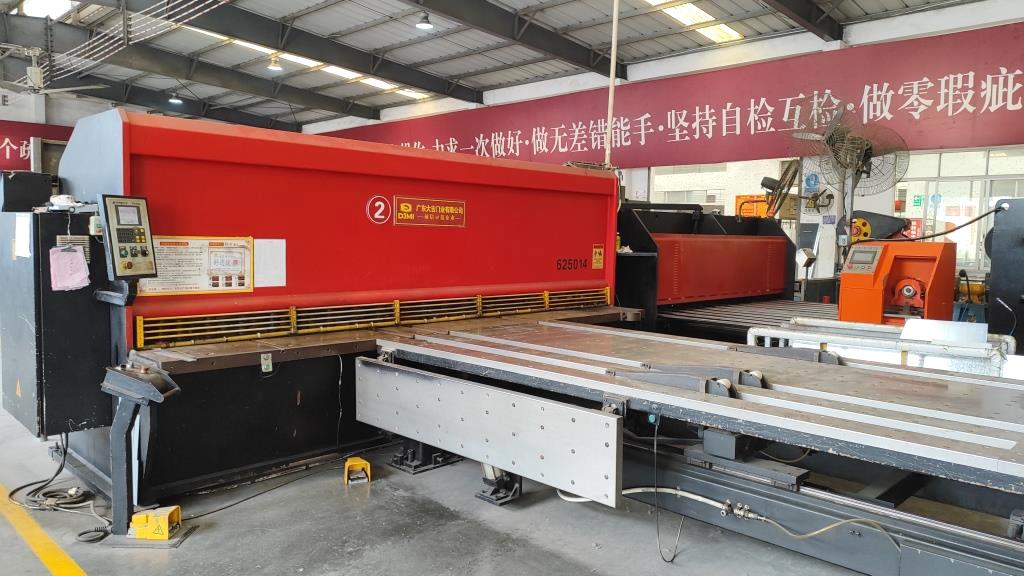
Our state-of-the-art machinery line includes high-speed CNC laser cutting systems, automatic welding hubs, CNC bending arrays, high-velocity turret punches, and automated wood-sanding units. To service the Tokyo market with reliable lead times, we run dedicated UV finish coating lines and high-temperature hydraulic laminating presses, maintaining a stable daily capacity of over 200 high-quality sets.
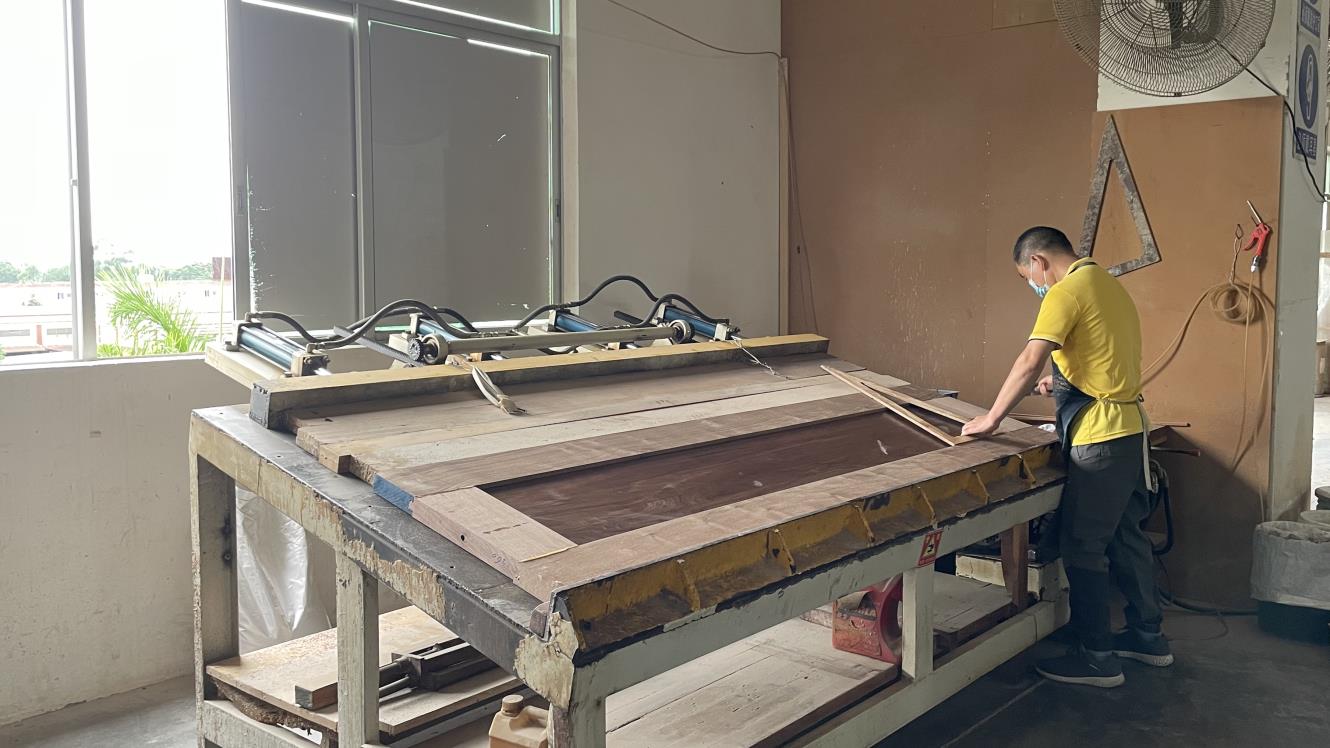
Every engineered flush door undergoes a systematic manufacturing process to guarantee performance and dimensional accuracy:
With installations in over 130 countries, Zhejiang Larsom Door Co., Ltd. ensures that exporting to Tokyo follows the local customs, port logistics, and quality compliance mandates. For Japanese ports—including Tokyo Port, Yokohama Port, and Osaka Port—we prepare clean container load bills, environmental documentation, and packaging methods that prevent moisture damage during ocean transit.
Our products undergo extensive cycles of environmental box chamber testing to ensure VOC and formaldehyde levels stay below detection thresholds. This documentation facilitates seamless customs clearance and guarantees acceptance during MLIT site inspections. To meet the aesthetic consistency demanded by Japanese architects, our quality control team employs spectral colorimetry to ensure consistency in wood grain tones across different shipments.
Explore our full line of engineered wooden flush doors, designed to meet the high structural, soundproofing, and fire protection requirements of global projects.
 Larsom Door